


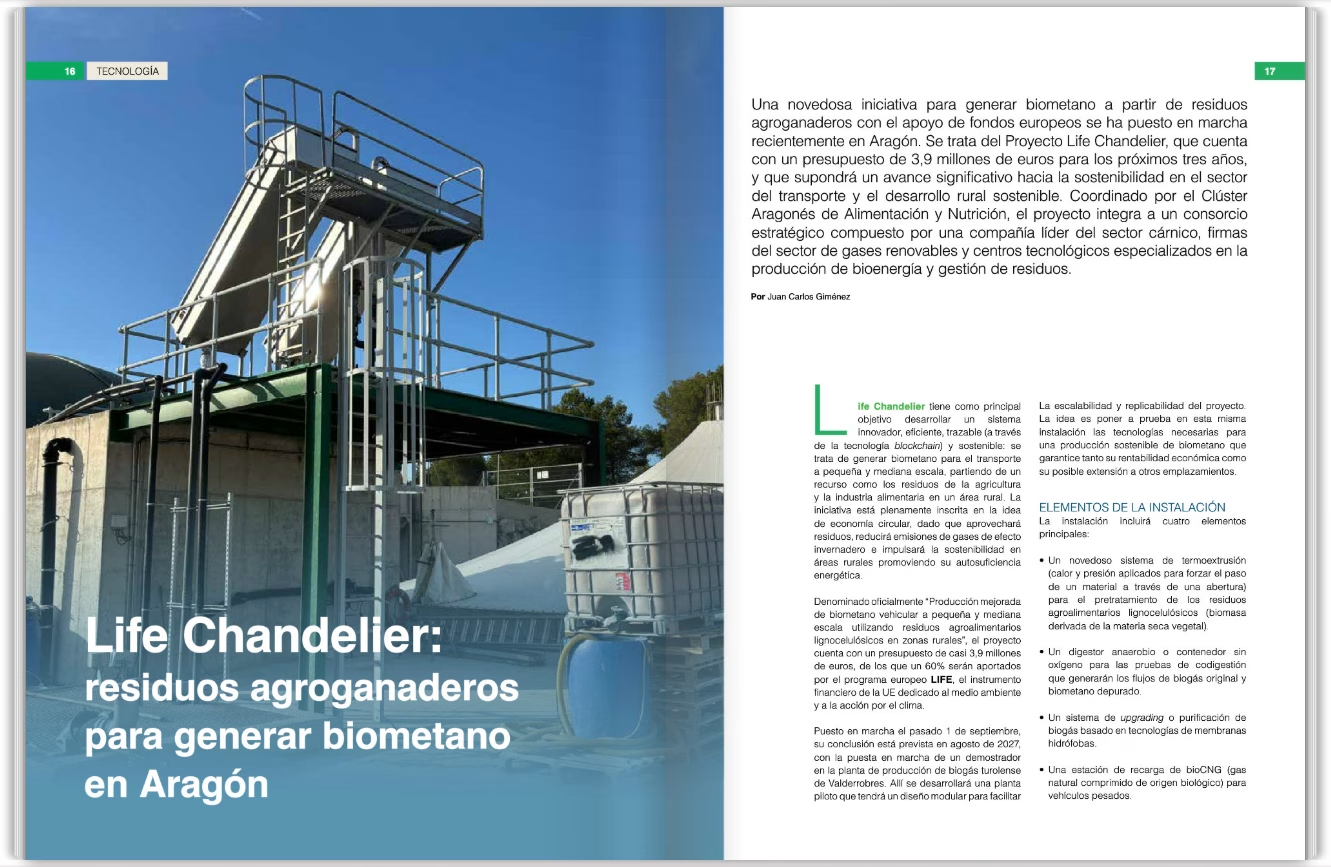
Recently, the LIFE CHANDELIER project has been highlighted in Sedigas’ Gas Actual magazine (pages 16-19), in an article highlighting its key role in the transition towards a sustainable circular bioeconomy in rural areas of Aragon. According to the article, LIFE CHANDELIER is a pioneering initiative that seeks to generate biomethane from agri-food waste in rural areas, with a budget of 3.9 million euros, 60% co-financed by the European LIFE program and to be developed in the Matarraña region, specifically in Valderrobres. The project aims to develop a traceable, profitable and sustainable system for the production of vehicle biomethane in small and medium scale plants, using lignocellulosic wastes such as alperujo, almond shells and vine shoots.
Valderrobres plant: an example of circular economy
The biogas plant in Valderrobres, owned by the Aragonese Water Institute and managed by the Arcoiris business group, will be the operational center of the project. This plant has the capacity to process 21,800 tons of biowaste per year and 141,500 tons of other by-products and generate biogas that will be converted into vehicle biomethane. In addition, it is integrated into a circular economy model by reusing liquids and solids as fertilizers.
Outstanding technological innovations
The article highlights the key innovations of the project:
- Pretreatment by thermoextrusion, which optimizes lignocellulosic residues.
- Anaerobic co-digestion with slurry and slaughterhouse waste.
- Biogas upgrading systems based on hydrophobic membranes, more efficient and sustainable than traditional methods.
A strategic consortium
LIFE CHANDELIER brings together a consortium of key organizations to ensure the success of the project:
- Aragon Food and Nutrition Cluster (AFC-Aragon Food Cluster): Project coordinator.
- GUCO (Ganadería Unida Comarcal S. Coop.): Leader in the meat sector and co-producer of agri-food waste.
- Genia BioenergyGenia Bioenergy: Specialist in the implementation of renewable gas production and anaerobic digestion technologies.
- Inderen (Ingeniería y Desarrollos Renovables SL): Focused on innovative solutions for energy sustainability.
- Instituto Tecnológico de Aragón (ITA): Specializes in research and development of advanced technologies.
- Eurecat Technology Center of CataloniaFocused on the optimization and digital modeling of processes.
And with the support of the Comarca del Matarraña.
Contribution to sustainable development
The biomethane produced will be validated as Bio-CNG in a heavy-duty vehicle that will travel 120,000 km during the project, reducing greenhouse gas emissions by up to 80% compared to fossil fuels. This model will also allow replicability in other rural areas of Europe.
Read the complete article
You can read the full article in Gas Actual magazine, accessible through the following link:

