LIFE CHANDELIER proposes to demonstrate and validate a cost-effective and sustainable model for agri-food waste management and biomethane production, focused on small and medium scale anaerobic digestion plants in rural áreas.
Use Case
The biomethane produced will be validated and used as biofuel for transport, in particular in a Heavy Duty Vehicle (HDV) for slaughterhouse operations, thus closing a circular bioeconomy model that covers the entire value chain.
CO2 reduction
The cost-competitive, feedstock-flexible biomethane production solution proposed, based on modular and versatile innovative technologies, will lead to a significant reduction of GHG emissions (up to 80%) and will enable cost-effective biomethane production in rural areas for sustainable transport.
Matarraña is a spanish rural area with intense agriculture and livestock activity declared Nitrate Vulnerable Zone by the European Commission.
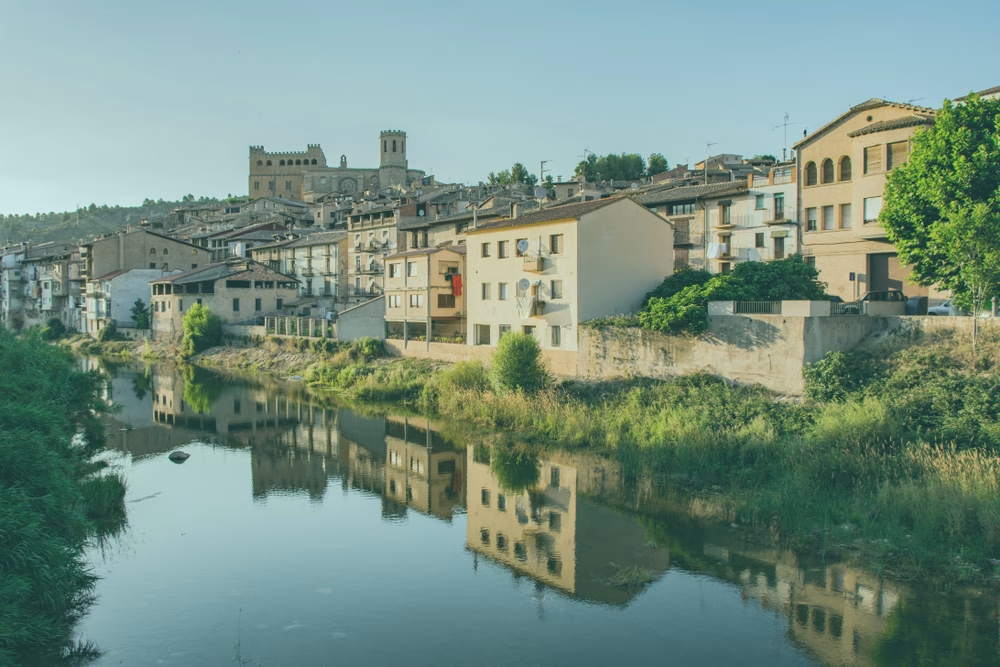
Aragon-Matarraña is the case study analyzed in the frame of LIFE CHANDELIER. Aragon region is one of Europe’s largest producers of olive products, wine and almonds. CHANDELIER demonstration plant will be located in particular in Valderrobres, core of the region of Matarraña.
The described initiative will be deployed at the industrial biogas plant located in Valderrobres (polygon 17, plot 60) within the province of Teruel, in Aragon. It was initially designed with a total processing capacity of approximately 133,000 ton/y of livestock, where pig slurry might represent the vast majority of incoming waste (90%). Since the operation was restarted operation in May 2023, current capacity is about 81,200 ton/y (80,000 ton pig slurry/y + 1,200 ton slaughterhouse waste/y). The current biogas production capacity is about 2,090,515 m3/y (260 m3/h).