Valderrobres Industrial Biogas Plant
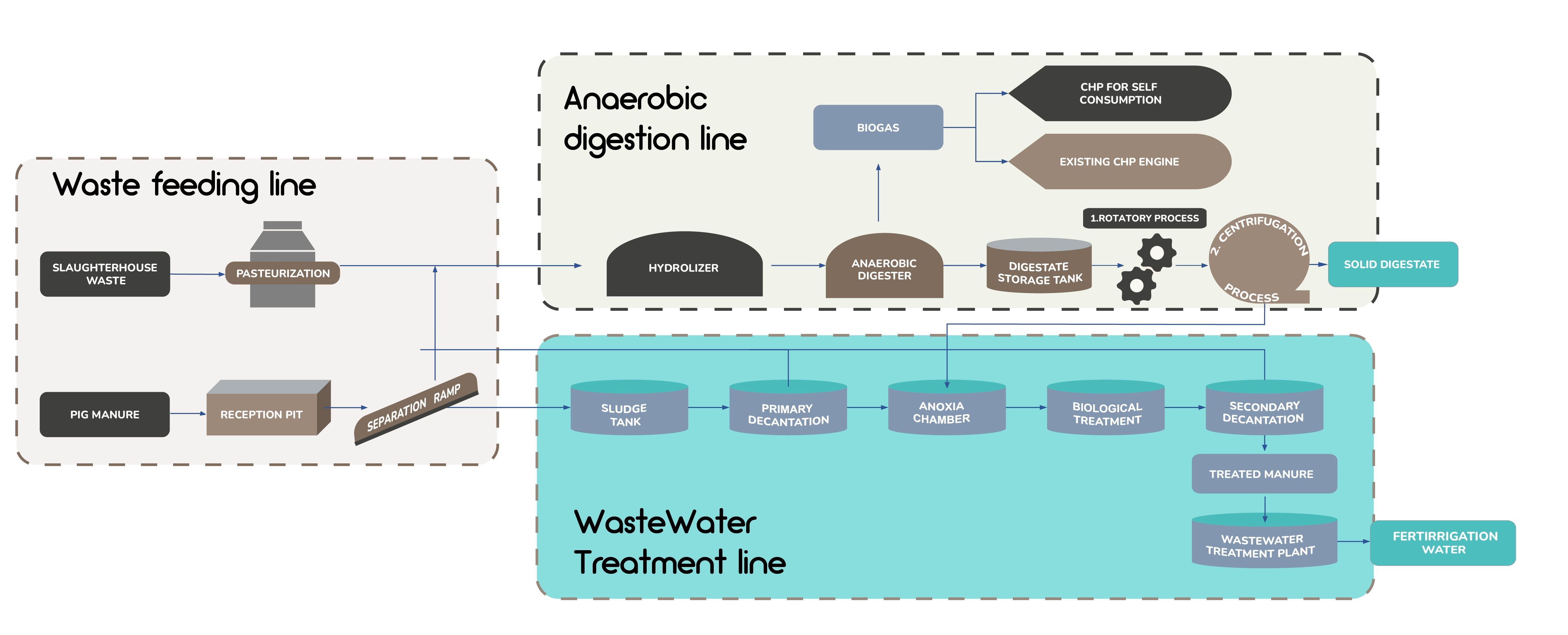
The industrial plant is formed by the following main lines towards the valorisation of the waste aforementioned:
Waste feeding line
It consists of i) the slaughterhouse waste pasteurization unit (thermal treatment at 75-85ºC, below 30 min) for pretreatment, and ii) the sieve-assisted reception pit for the removal of inerts within the pig slurry before entering into the digestion platform. The solids retained by the sieve are sent to the wastewater treatment (WWT) line.
Anaerobic digestion line
Pretreated waste is subjected to AD, with the main objective of producing biogas that is later used to generate electrical and thermal energy in the cogeneration plant. The biogas produced has a current flow rate of 260 m3 /h and contains about 60% methane (CH4). All of the electrical energy generated will be exported to the public service network of the electrical distribution company. This energy is generated in a 500 kWel CHP. A part of the thermal energy obtained will be used digesters’ heating and the residual heat will be self-consumed in the plant. Digestate after AD is produced at a rate of ~72.300 ton/y, where the solid fraction obtained after centrifugation represents about 50% (p/p). Such solid fraction is transported to a storage area for later use as fertilizer or delivery to a company specialized in compost manufacturing.
WWT line
The solid fraction obtained from pig slurry pretreatment, and the solids from decantation unit are first subjected to settling. Then, combined with the liquid fraction of the digestate are subjected to the anoxia chamber, where its biological treatment process begins, which includes nitrification and denitrification. The solid fraction from this treatment, which includes undesired contaminants, is handled by an authorised manager with the aim of recycling it as organic fertiliser.